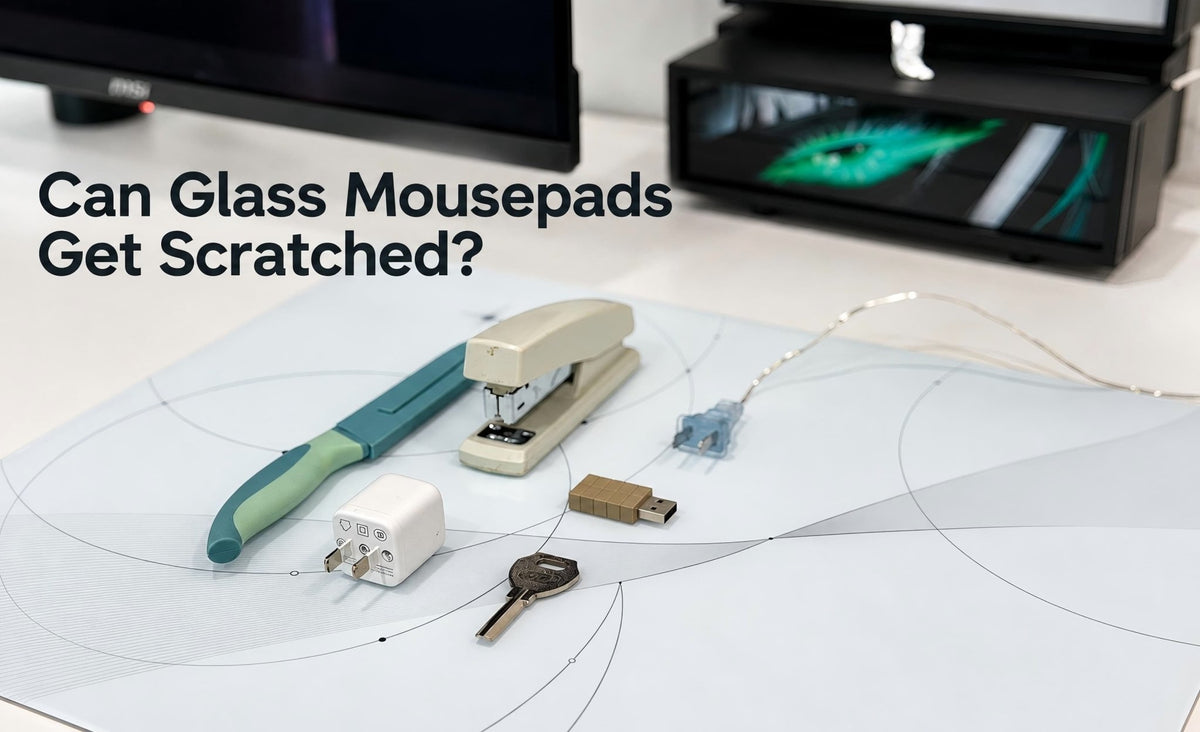
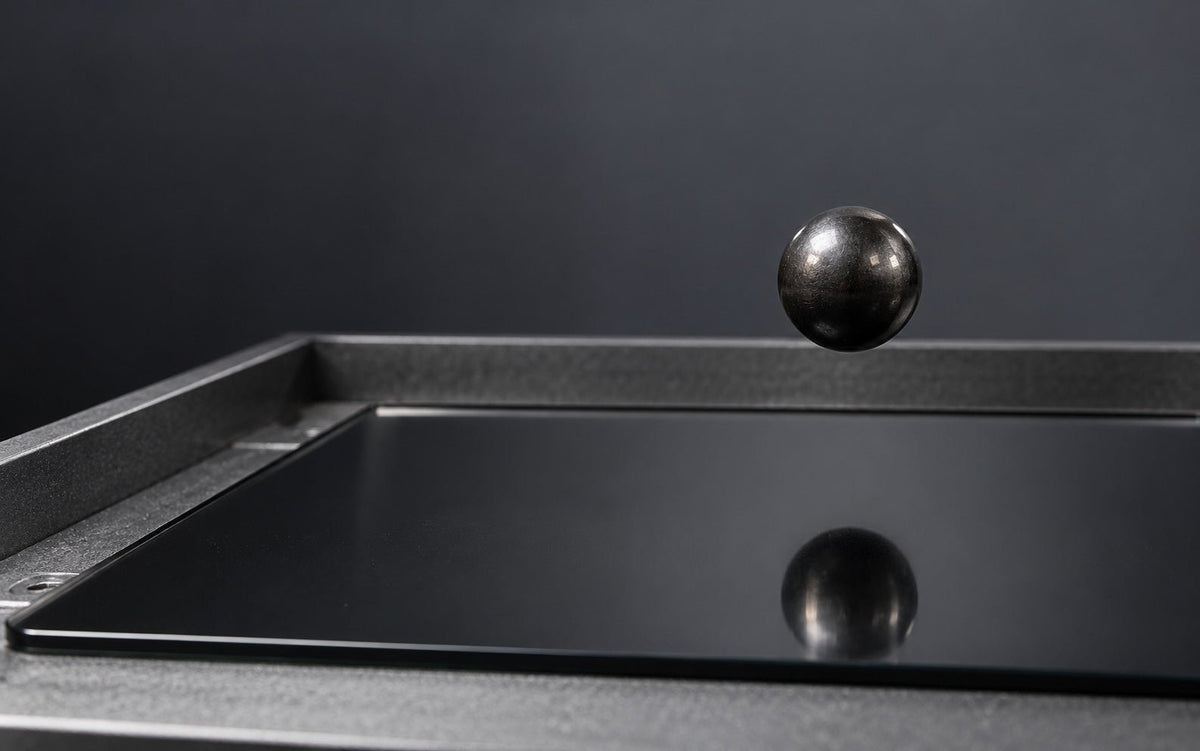
Glass mousepads provide a firm, consistent surface, and it is natural to ask how well they handle impact. At CLUSTRS, drop ball testing is part of our internal quality-control process. It helps us check how a finished glass mousepad responds to a controlled impact before it is packed for shipment.
A passed drop ball test is a quality-control signal, not a guarantee that glass can never break. Glass can still be damaged by a hard impact, especially near an edge or corner. Understanding what the test measures helps set the right expectations for daily use, storage, and transport.
What Is a Drop Ball Test?
A drop ball test is a controlled impact test. A hard ball of a defined mass is dropped from a defined height onto a specified area of the product. The product is then inspected for cracking, breakage, or visible damage.
For a glass mousepad, this type of test helps assess whether the glass and its finished construction respond as expected under the specified test conditions. It is one way to check product consistency during quality control.
The test helps identify potential issues before a product reaches a customer. It does not show whether a mousepad can survive every possible accident.
What Does a Drop Ball Test Show?
A drop ball test provides information about a glass mousepad’s response under the conditions used in that test. The ball’s mass, drop height, impact location, and the way the pad is supported all matter when interpreting a result.
It can help check:
- Whether the glass shows unexpected weakness under a controlled impact
- Whether the finished pad has visible cracks or damage after testing
- Whether the manufacturing process is producing consistent results
- Whether the product meets the internal quality standard used for that test
CLUSTRS glass mousepads use chemically strengthened glass to improve resistance to everyday pressure and impact. Drop ball testing is part of checking that the finished product performs as intended before shipping. The result applies to the tested conditions and does not establish resistance to every type of force.
What the Test Does Not Guarantee
A controlled test cannot reproduce every real-world situation. A glass mousepad may pass a drop ball test and still break if it experiences a different type of force later.
Damage remains possible when:
- A hard object strikes the edge or corner
- A heavy item falls onto the pad
- The pad is dropped onto a hard floor
- A shipment receives severe pressure or impact
- The glass is hit by a sharp or narrow object
These situations concentrate force differently from a controlled test. The exact angle, location, object shape, and impact force can all change the outcome.
Drop ball testing supports impact-resistance quality control. Passing the test does not mean the product will never crack or break.
Why Edges and Corners Need Extra Care
The way a glass mousepad is supported affects how it responds to impact. An impact on the broad face of the pad is different from a direct strike to an exposed edge or corner.
Edges and corners are more exposed. A direct hit in these areas can concentrate force into a smaller point, increasing the chance of damage. This is why a pad may stay intact through normal desk use but still crack after a strong knock to its edge during transport or setup.
CLUSTRS designs use shaped edges to create a smoother transition around the pad. This design feature does not make the glass unbreakable, so careful handling remains important. When moving a glass mousepad, support it with both hands and avoid placing it where it can be bumped by a chair, monitor arm, or other heavy equipment.
How to Reduce the Risk of Damage
A few simple habits can help protect a glass mousepad over time:
- Check the surface and edges after unboxing.
- Keep heavy objects away from the pad.
- Do not stack equipment directly on top of it
- Lift the pad with both hands when moving it.
- Keep the original packaging for future moves when possible.
- Use a protective glass mousepad case for travel, storage, or moving between setups.
A case is especially useful when the mousepad will be packed in a bag, placed in a vehicle, or stored with other desk equipment. It can help protect the pad during handling, but it does not make the glass unbreakable.
What to Do If Your Glass Mousepad Arrives Damaged
Inspect your mousepad when it arrives, especially around the edges and corners. If you notice a crack, chip, or shipping damage, take clear photos of the product and packaging, then contact the seller or support team as soon as possible.
Do not continue using a glass mousepad with a visible crack or chipped edge. Even a small area of damage can become more serious with further handling.
FAQ
Does a drop ball test mean a glass mousepad cannot break?
No. It shows how the mousepad performs under a specific controlled impact condition. Real-world impacts can vary in force, angle, location, and object shape.
Why can a glass mousepad break during shipping?
Shipping may involve drops, compression, vibration, or impacts to edges and corners. These conditions are less predictable than a controlled quality-control test.
Are glass mousepad edges more vulnerable than the center?
Edges and corners can be more vulnerable because force is concentrated in a smaller area when they are hit directly. Handle these areas carefully during setup, storage, and travel.
Should I keep the original packaging?
Yes. The original packaging is usually the most practical option for protecting a glass mousepad during a move, storage period, or return shipment.