Why Pros Are Switching (And Should You?)
The conversation around glass versus cloth mousepads remains active in 2026 as players evaluate surfaces based on their personal gaming habits, desk environments, and long-term preferences. Some competitive users and content creators report switching after noticing gradual changes in cloth performance, while many others continue to prefer the familiar characteristics of fabric pads. CLUSTRS glass mousepads, featuring the CLST 1.0 micro-etched surface, offer one example in the glass category with a speed-leaning balanced feel that supports smooth starts, consistent glide, and reliable stopping power.
This article provides an objective comparison of key aspects, including glide behavior, maintenance requirements, comfort during extended sessions, and suitability across different use cases. Rather than suggesting one type is universally superior, the focus is on helping readers understand trade-offs so they can make choices aligned with their specific needs, whether playing creative modes in Roblox, engaging in dynamic matches in Fortnite, or working on detailed projects in Minecraft. Many factors, such as sensitivity settings, room humidity, mouse skates, and overall desk setup, influence the decision, making personal testing and gradual adaptation important parts of the process.
The Current Space of Mousepad Choices in 2026
In 2026, both glass and cloth mousepads continue to hold significant roles in gaming and productivity setups, with ongoing refinements addressing earlier user feedback in each category. Cloth options maintain strong popularity in many professional scenes due to their established textures and stopping power that many players have developed muscle memory around over the years of use. At the same time, glass surfaces have attracted interest from users seeking more predictable performance across longer periods of ownership. Players who dedicate hours to Roblox user-generated experiences, Fortnite build battles and rotations, or intricate Minecraft world-building often assess how surface properties interact with their typical movement patterns and cleaning routines.
CLUSTRS approaches the category with a balanced emphasis on performance and lifestyle elements, offering series such as Minimalist (Atom and Orbit for clean hybrid use), Channel Cute (Lilies and similar floral themes for aesthetic desks), Performance IP (Astra and Akira for character collectors), artist collaborations, and full custom options where users upload personal designs. Discussions across Reddit threads and YouTube setup videos frequently highlight that suitability varies widely; some thrive with the direct feedback of glass after an adjustment phase, while others value the softer resistance of cloth in humid conditions or for specific grip styles. The market now includes more accessory bundles and thickness variations, giving users additional tools to fine-tune their experience regardless of the base material chosen.
Key Differences: Glide, Control, and Consistency
Glass mousepads, including those from CLUSTRS, generally present a hard micro-etched surface that facilitates relatively quick initiation of movement and a uniform glide profile that many users describe as consistent from session to session. The CLST 1.0 texture is positioned as speed-leaning balanced, offering smooth starts for fast flicks, steady tracking during sustained aiming or creative work, and reliable stopping power for controlled microadjustments. This can feel supportive in scenarios requiring frequent direction changes in Fortnite or precise cursor movements in Minecraft building. Cloth mousepads, by contrast, typically provide a softer fabric texture with more inherent friction that supports deliberate stopping actions and a plush sensation under the wrist and forearm.
However, with regular use involving sweat, oils, and dust, cloth surfaces may gradually develop areas of uneven glide or compression that affect predictability over months. Glass tends to maintain more uniform characteristics provided it receives basic care, though it transmits skate noise more noticeably and experiences faster PTFE skate wear. These structural differences mean glass may appeal to players who prioritize long-term surface stability, while cloth remains preferred by those who enjoy traditional tactile resistance and are accustomed to periodic washing routines. Mouse sensor compatibility, lift-off distance settings, and individual skating preferences further shape real-world outcomes, making side-by-side comparison valuable for those considering a change.
Maintenance and Longevity Considerations
Maintenance represents one of the clearer practical distinctions between the two categories. Glass mousepads often allow for straightforward daily care; a wipe with a soft microfiber cloth and clean water is usually sufficient, and features like the AF coating on CLUSTRS models help reduce the visibility of fingerprints and light smudges, although the coating’s effectiveness diminishes gradually with friction and cleaning. This simplicity can reduce overall effort compared to cloth pads, which commonly require more involved washing and drying cycles to remove accumulated debris and may need earlier replacement if fibers become matted or stained. CLUSTRS glass constructions use strengthened glass (either 2.5mm chemical-strengthened with 2.5D beveled edges or 3.5mm tempered with 3D rounded safety edges) along with a full-coverage anti-shatter membrane that helps contain fragments in case of accidental breakage.
Even so, users must still handle glass carefully to avoid drops or uneven pressure. In humid environments or for players with sweaty hands during long sessions, pairing a glass pad with a gaming arm sleeve can improve skin contact comfort. Many users who switch report appreciation for the reduced maintenance burden over extended ownership periods, while dedicated cloth users often prefer their familiar cleaning rituals and the forgiving nature of fabric toward minor desk imperfections. Considering these ongoing care requirements alongside expected lifespan helps inform whether a transition aligns with one’s lifestyle.
Performance in Popular Games: Roblox, Fortnite, and Minecraft
Performance experiences vary depending on the game and player style. In Roblox, where sessions often mix social exploration, creative building, and mini-games, the consistent glide of a glass surface can support fluid navigation and reduce the development of slow spots that sometimes appear on well-used cloth pads. Fortnite players frequently discuss how a balanced glass surface aids wide swipes during building phases and controlled tracking in combat, although the adaptation period to the tactile feedback requires some time to rebuild muscle memory. For Minecraft enthusiasts focused on detailed terraforming or redstone contraptions, the flat and stable profile of glass can contribute to precise movements over long creative sessions. Cloth pads continue to serve many users well in these titles due to their inherent stopping power, which supports frequent micro-corrections without as much conscious adjustment.
CLUSTRS options, available in sizes from compact XS for mobile use to larger L formats for low-sensitivity play, incorporate a high-grip PU base that helps maintain position during energetic movements. Real community shares indicate that some players achieve good results on glass by experimenting with PTFE skate types (such as smaller dots for speed-oriented feel or donut styles for more control) and sensitivity tweaks, while others find cloth more immediately comfortable for their particular grip and playstyle. Individual testing within one’s own game library remains the most reliable way to evaluate fit.
Comfort, Desk Setup, and Lifestyle Factors
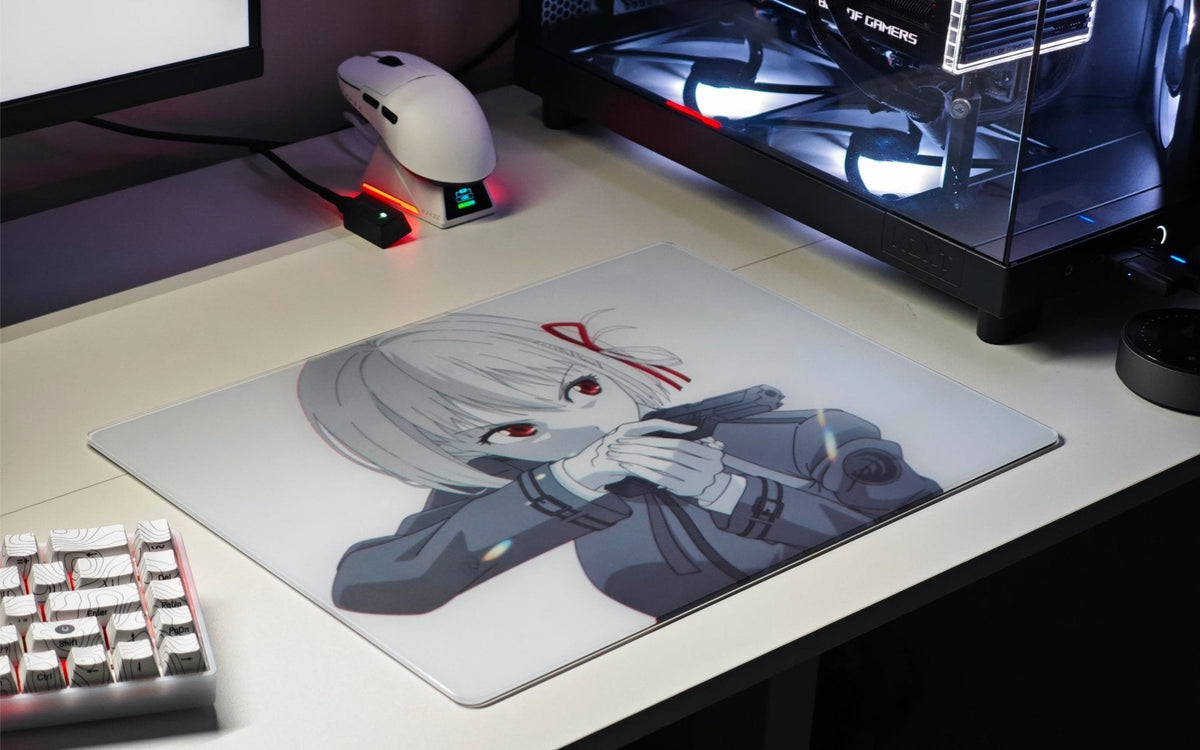
Comfort during extended use depends heavily on edge design and overall desk integration. CLUSTRS 2.5mm models, such as those in the Channel Cute Lilies series, feature 2.5D beveled edges intended to create smoother transitions for the forearm and wrist, while 3.5mm versions provide 3D rounded safety edges that contribute to a more solid and weighted presence on the desk. Glass delivers a firmer, more direct feedback that some players find motivating within clean, aesthetic setups, especially when coordinated with RGB lighting, matching peripherals, or custom artwork through the CLUSTRS creator tool.
Cloth pads offer built-in cushioning that can feel gentler under prolonged contact, potentially reducing perceived pressure points for certain wrist positions. Lifestyle considerations also matter; users who value visual personalization often explore custom glass designs, while those prioritizing maximum portability might prefer cloth’s ability to roll or specific glass bundles with protective PU cases. Environmental factors like room temperature and humidity can influence skin interaction with glass, sometimes making an arm sleeve a helpful addition. Many desk setup enthusiasts appreciate how glass surfaces maintain a clean appearance and integrate into cohesive battlestations, contributing to an overall motivating workspace for both gaming and daily tasks.
Why Some Players Are Switching in 2026
Community conversations in 2026 suggest that the desire for more consistent surface feel over time motivates certain players and content creators to explore glass options. Cloth pads can undergo gradual changes from compression, absorbed oils, or repeated washing, prompting some to seek alternatives that support more predictable movement across weeks and months. CLUSTRS addresses this with its unified CLST 1.0 platform across diverse series, allowing users to select styles matching their preferences while retaining core balanced characteristics.
Thoughtful accessories, including Arctic White PTFE skates for a lighter feel, Orbit donut skates for added support, gaming arm sleeves for sweat management, and PU cases for protection, further ease transitions through convenient bundles such as Pro Play or On-the-Go. That said, switching is not universal; many experienced players continue succeeding with cloth due to deep familiarity or specific control needs. The decision typically follows a trial period, careful consideration of skate replacement frequency on hard surfaces, and honest assessment of whether the adaptation effort will be worthwhile for one’s particular mix of games and usage patterns.
Objective Trade-Offs: No Universal Winner
Both glass and cloth mousepads offer distinct strengths and limitations that make them suitable for different types of users, rather than one being ideal for everyone. Cloth mousepads generally deliver a softer initial texture with more built-in friction, which many players find helpful for deliberate stopping actions and a plush sensation under the wrist during extended sessions. However, over time, they can absorb oils, sweat, and dust, potentially leading to gradual inconsistencies or compressed areas that affect glide predictability. Glass surfaces, such as those in CLUSTRS products with the CLST 1.0 micro-etched texture, tend to provide a more uniform glide profile and simpler daily cleaning routines, often described as supporting consistent movement across weeks and months when properly maintained. This comes alongside a firmer overall feel, faster PTFE skate wear that requires periodic replacement, and an adaptation period as users adjust to the tactile feedback and balanced characteristics.
CLUSTRS emphasizes a speed-leaning balanced approach without extreme claims, making its lineup, including 2.5 mm low-profile options like Lilies and 3.5 mm solid builds like Atom or Akira, appropriate for mixed gaming, office work, study, and creative activities in titles such as Roblox, Fortnite, and Minecraft. Factors like budget constraints, available desk space, personal sensitivity settings, humidity levels in the environment, and willingness to manage accessories such as arm sleeves or extra skates all play important roles in determining a better fit. Many community members on Reddit and YouTube recommend experimenting with both categories where possible, perhaps through shorter trial periods or borrowing setups, instead of assuming any single material will perfectly address every aspect of mouse control and comfort. This objective perspective helps users set realistic expectations and select options that align with their actual habits and priorities.
Common Mistakes to Avoid and Practical Tips
First-time buyers and those switching between mousepad types often encounter avoidable setbacks that impact satisfaction. A frequent error involves selecting size or thickness without first measuring the desk area or observing natural mouse movement patterns, which can result in cramped space on smaller pads or unnecessary weight from larger 3.5mm models that may not suit higher sensitivity preferences. Another common oversight is underestimating the adaptation period needed to become comfortable with the CLST 1.0 surface characteristics on CLUSTRS glass mousepads; the balanced glide with smooth starts and reliable stopping power feels noticeably different from cloth, so allowing several sessions or even a couple of weeks helps rebuild muscle memory effectively. Ignoring skate compatibility also leads to frustration, as PTFE skates tend to wear faster on hard glass surfaces, making it wise to keep spares and choose styles like Arctic White dots for a lighter feel or Orbit donuts for more support.
Some users overlook maintenance routines, such as regular gentle wiping with a microfiber cloth and water to preserve the AF coating’s helpful properties on CLUSTRS pads. Practical tips include starting with a versatile S size (400x300 mm) if uncertain and reviewing current official product pages for accurate bundle details (Pro Play, On-the-Go, etc.), warranty information (typically 3 years), and care guidelines. For custom designs, prepare high-resolution images and use the preview tool. Pairing with appropriate accessories like gaming arm sleeves in humid conditions or PU cases for portability further enhances the experience. Taking these steps reduces common challenges and supports a smoother transition for players across popular games and daily desk use.
How to Choose and Buy the Right Option for You
Deciding between glass and cloth ultimately requires honest self-assessment of primary activities, sensitivity style, desk constraints, and long-term maintenance willingness. Begin by considering how much time you spend in different game types, for instance, whether wide swipes in Fortnite, creative precision in Minecraft, or varied Roblox experiences dominate your sessions, and how important surface consistency versus immediate plush feel is to you. For those leaning toward glass, exploring CLUSTRS options provides a practical entry point through their unified CLST 1.0 platform.
Visit the custom creator at Create Unique Mat to upload personal designs, or browse established series such as Channel Cute (Lilies for aesthetic appeal), Minimalist (Atom and Orbit for clean hybrid setups), or Performance IP models. Evaluate thickness preferences (2.5mm for lower profile or 3.5mm for solidity) and consider bundles that include useful accessories like PTFE skates, arm sleeves, and protective cases. If remaining with cloth feels more comfortable, numerous manufacturers offer quality options for direct comparison. Many players benefit from starting small with an S-size glass pad and quality skates to test compatibility before committing to a larger one.
The Role of Accessories in Maximizing Your Chosen Mousepad
Accessories can significantly enhance performance and comfort regardless of whether you choose glass or cloth. For CLUSTRS glass mousepads, PTFE skates (Arctic White for faster glide or Orbit donuts for control) allow fine-tuning on the CLST 1.0 surface, while gaming arm sleeves help manage skin contact in humid conditions or during low-sensitivity arm movements. PU cases protect the pad for travel or storage, which is especially useful with On-the-Go bundles. These additions complement the high-grip PU base and edge designs (2.5D or 3D), reducing common issues like skate noise or forearm fatigue. Players often report better overall satisfaction when pairing their pad with matching accessories tailored to their setup.
Community feedback from Reddit and YouTube in 2026 reveals nuanced views on the glass vs cloth debate. Many transitioning to CLUSTRS glass models appreciate the consistent feel during long Fortnite or Minecraft sessions after adaptation, along with easier cleaning. Others prefer cloth for its familiar stopping power in tactical play. Common themes include faster skate wear on glass and the benefits of arm sleeves for sweaty hands. These stories highlight the importance of matching the surface to individual habits rather than following general trends.
Conclusion
The choice between glass and cloth mousepads ultimately depends on aligning material properties with your individual habits, games, and setup goals. CLUSTRS glass mousepads provide one route focused on balanced performance and design flexibility.
Start exploring here: CLUSTRS Custom Glass Mousepad.
FAQs
Should I switch from cloth to glass mousepads?
Switching depends on your priorities, playstyle, and willingness to adapt. Many players appreciate the more consistent glide and easier cleaning that glass surfaces like CLUSTRS CLST 1.0 offer over time, as cloth can develop uneven spots from absorbed oils and dust. The speed-leaning balanced feel with smooth starts, steady tracking, and reliable stopping power suits varied movements in games such as Roblox creative sessions, Fortnite build fights, and Minecraft building.
What are the main differences between 2.5mm and 3.5mm glass mousepads?
The 2.5mm versions, such as certain Channel Cute models like Lilies, use chemically strengthened glass with 2.5D 45° beveled edges. This creates a lower profile that many players find allows smoother forearm and wrist transitions during long sessions. The 3.5mm options, common in series like Atom, Akira, or Astra's Gaze, employ high-temperature tempered glass with 3D CNC safety-rounded edges for a more solid, weighted presence and added perceived stability on the desk.
How do you clean and maintain a glass mousepad?
Daily maintenance for glass mousepads is relatively straightforward. A soft microfiber cloth with clean water or a gentle rinse is usually enough to remove dust and light marks. CLUSTRS models include an AF coating that helps reduce visible fingerprints and smudges, though this layer gradually wears with normal use and cleaning. Avoid harsh chemicals, alcohol, or abrasive materials, as they can shorten the coating’s helpful lifespan.
Do glass mousepads wear out skates faster?
Yes, PTFE skates generally wear faster on hard glass surfaces than on cloth. This is a normal characteristic of using glass mousepads. CLUSTRS recommends keeping spare skates handy, options like Arctic White dots for a faster feel or White Orbit donuts for more control allow you to fine-tune performance on the CLST 1.0 surface. Replacing skates when movement feels scratchy or uneven helps preserve smooth tracking and prevents the mouse base from contacting the glass.
Is an arm sleeve necessary with glass mousepads?
An arm sleeve is not required for everyone but can be helpful in certain situations. It reduces direct skin contact and helps manage sweat or sticking sensations during low-sensitivity arm movements or in humid environments. CLUSTRS gaming arm sleeves (available in different sizes) are designed to complement their glass pads, particularly during long sessions in Roblox, Fortnite, or Minecraft. Players with drier skin or higher sensitivity often find them unnecessary, while others report improved comfort.
Which size glass mousepad should I choose?
Size selection depends on your desk space and sensitivity. XS (260x210mm) works well for compact or mobile setups. S (400x300mm) offers a versatile balance for most users. L (500x400mm) provides more room for low-sensitivity players who prefer wide movements. Measure your available area and observe your natural mouse habits. CLUSTRS offers these sizes across many series, including custom options. Starting with S is often recommended for first-time glass users to evaluate fit before committing to larger formats.
Are glass mousepads compatible with all mice?
Most modern optical gaming mice work on micro-etched glass surfaces like CLUSTRS CLST 1.0, but results can vary based on sensor design, lift-off distance (LOD), firmware, and skate condition. Cleanliness of both the mouse sensor and pad surface is important for reliable tracking. Testing with your specific mouse and adjusting settings helps achieve optimal performance. Some players make minor sensitivity changes during the adaptation period.
How durable are CLUSTRS glass mousepads?
CLUSTRS glass mousepads use strengthened glass (chemical or tempered, depending on thickness) and include a full-coverage anti-shatter membrane that helps contain fragments in case of accidental breakage. They are built for normal desk use but remain glass products; avoid drops, heavy impacts, or bending. Proper handling and storage (especially with PU cases for travel) support longevity. The 3-year warranty covers manufacturing issues.
Can I customize a CLUSTRS glass mousepad?
Yes. The custom creator allows you to upload personal artwork while using the same CLST 1.0 balanced surface. High-resolution images (300 DPI recommended) and careful preview review produce the best results. Slight color variations may occur due to screens and printing. Custom pads are available in both 2.5mm and 3.5mm thicknesses.
How long does it take to adapt to a glass mousepad?
Adaptation time varies by individual. Many players report noticeable improvement in comfort and muscle memory within a few days to two weeks of regular use. Starting with familiar games like Fortnite or Minecraft and gradually adjusting sensitivity and skates helps smooth the transition. Consistency of the CLST 1.0 surface often becomes an appreciated feature once adjusted.
Are glass mousepads only good for FPS games?
No. While useful in tactical FPS titles, the balanced characteristics and easy maintenance also support creative play in Roblox and Minecraft, MOBA-style games, office work, and general desk use. CLUSTRS series caters to different lifestyles beyond pure competitive FPS. (82 words)
What should I consider before buying a glass mousepad?
Evaluate your desk space, primary games, sensitivity, maintenance preferences, and budget for accessories. Review current official product details, bundles, and community experiences. Testing with an S-size option from CLUSTRS can provide valuable real-world insight before larger commitments.